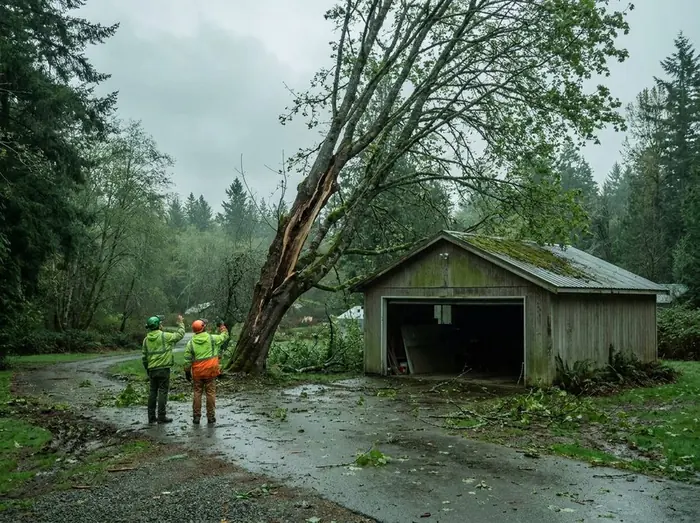
Leaning, split, or already down.
A tree that has moved is not the same job as a tree that is standing still. There is stored energy in it and it will react when you cut. That is the work we have been called out for over thirty years, including the ones other crews turned down.
What counts as a hazard tree?
A hazard tree is one that has already failed or is likely to: split trunk, lifted root plate, hollow base, heavy deadwood, or a lean that appeared after a windstorm. It is dangerous to cut because the wood is under tension and moves when the saw goes in.
American Tree Care handles storm and hazard work across Snohomish and King County. Call or text the cell at (425) 346-9931 if it cannot wait for a callback.
What we get called out for.
If any of these describe your tree, it is worth having someone look at it before the next storm rather than after.
A new lean after wind
The root plate has lifted, or the soil on one side has cracked and heaved. A tree that has started to go usually keeps going.
A cracked or forked trunk
Codominant stems pulling apart at the union, or a visible crack running down the trunk. These fail suddenly and completely.
Fungus or a soft base
Conks at the base, a cavity that holds water, or bark falling away. Often the outside looks fine right up until it does not.
Caught in the next tree
One of the most dangerous situations there is. Nobody should be under it and nobody should cut the tree holding it.
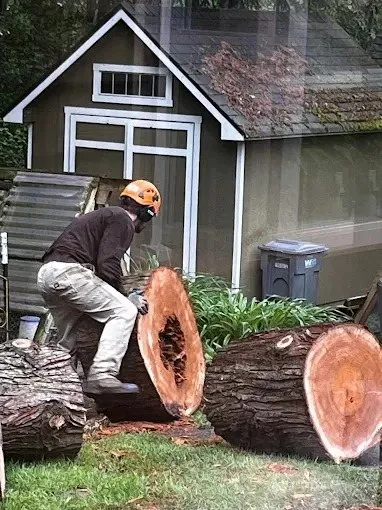
A tree under tension does not behave like a healthy one.
A split trunk, a lifted root plate, or a tree hung up on the one beside it has energy stored in it. Cut it in the wrong order and it moves fast, in a direction nobody planned for. That is a job for someone who has taken down thousands of them, not a landscaper with a rented saw.
From your call to the tree being gone.
Call or text a photo
A picture of the base and the lean tells us what gear to bring, and often whether it needs to be today.
We tell you straight
If it can safely wait a week, we will say so. If it cannot, we will say that too and give you a firm price.
Make it safe first
Where a tree is on a structure, the priority is taking the load off it before anything else happens.
Remove and finish
The tree comes out, then cleanup to the level we agreed on at the estimate.
The rest of what we do.
Storm work often turns up the next problem. Anything found on site gets priced before we leave, never added after.
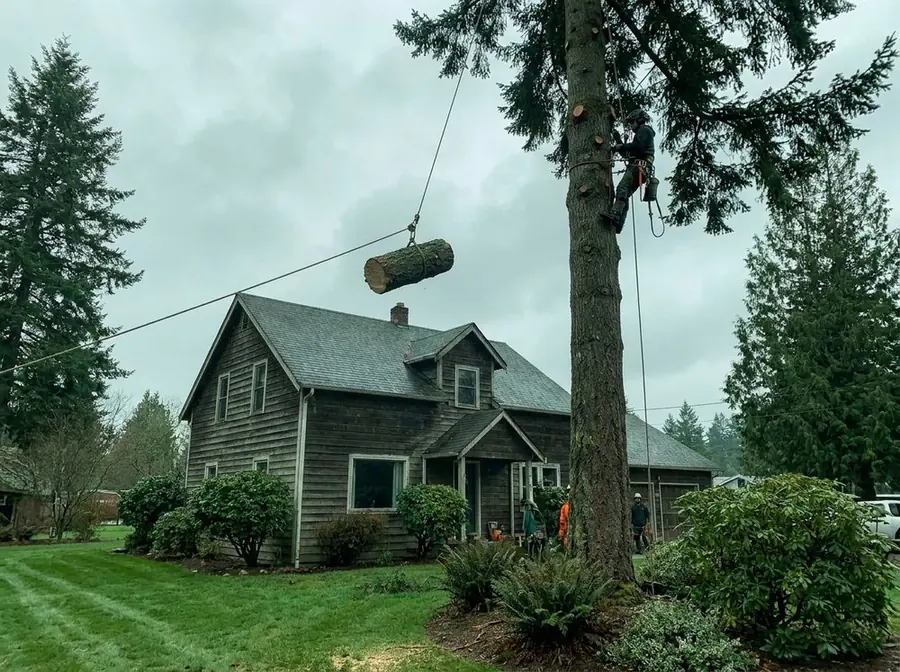
Tree Removal
Rigged down in sections when there is no room to fell it.
See the page →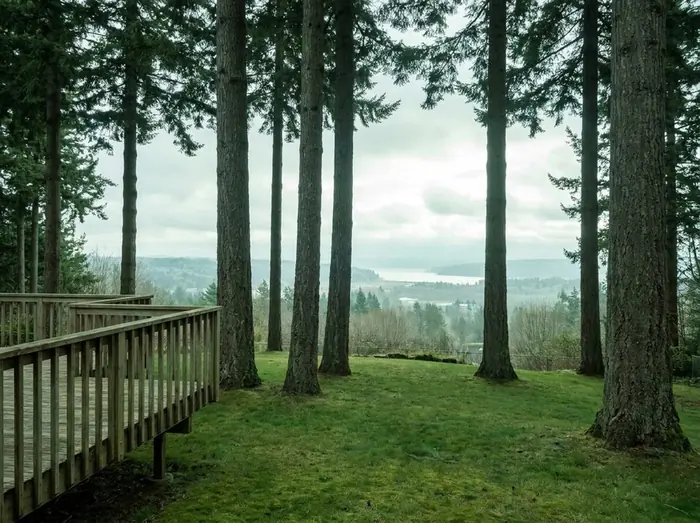
Wind Thinning & View Clearing
Open the sightline back up without stripping the property.
See the page →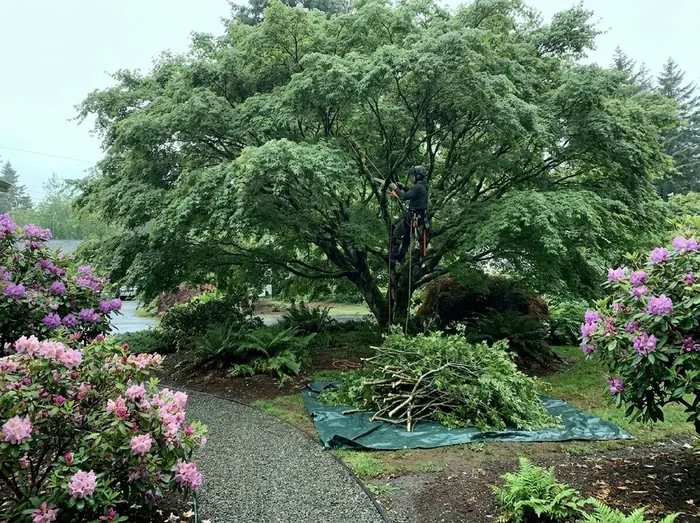
Tree & Shrub Pruning
Deadwood out, clearance back, shape kept.
See the page →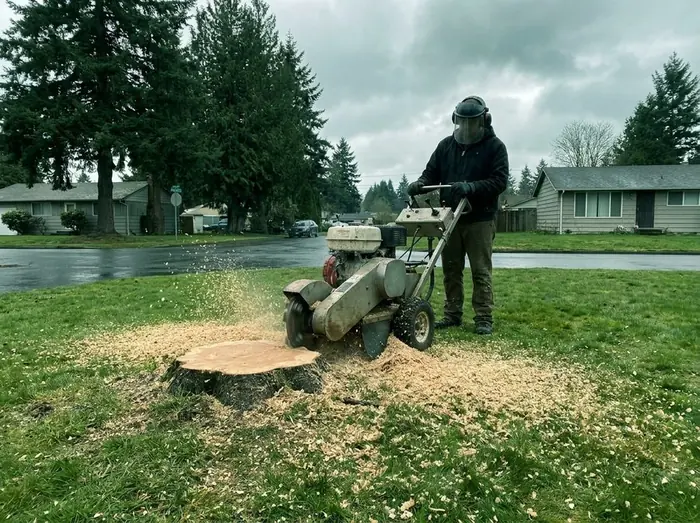
Stump Grinding
Below grade, so you can plant, sod or mow over it.
See the page →Storm and hazard questions, answered.
A tree is on my house. What do I do first?
How fast can you get out here?
My tree is leaning after the wind. Is it going to fall?
Does my insurance cover this?
Do you charge more for emergency work?
Do you want money up front for emergency work?
Can you take a tree off the service line?
Tell us what the tree is doing.
For anything urgent, call or text the cell rather than the form. A photo of the base and the lean helps more than anything else you can tell us.
A photo tells us more than a paragraph. Texting is usually the fastest way to a number.
Serving Snohomish & King County
WA #AMERITC887JO
Do not wait for the next windstorm.
If a tree has moved, split, or come down, we will look at it and tell you straight what it needs. The estimate costs nothing.